The Coverage That Covers Nothing: Decoding Best Buy's Extended Warranty Word Salad
There's a beautiful moment that happens in every Best Buy transaction. You've picked out your TV, your laptop, your fancy espresso machine — whatever it is — and the blue-shirted associate leans in with the warm, reassuring energy of a family doctor and says, "Do you want to protect your investment?" The protection plan sounds so reasonable. So thorough. So safe.
Fast forward eighteen months. Your laptop won't turn on after a power surge during a summer thunderstorm. You dig out your paperwork, call the number, and spend forty-five minutes on hold before a representative cheerfully informs you that your claim has been denied. The reason? Your surge damage doesn't qualify under the specific failure classification outlined in subsection 4(b) of your Geek Squad Protection agreement.
Welcome to the warranty shell game, Best Buy style — where the pea is never under the shell you picked.
The Magic Words They Use to Sell It
Best Buy's protection plan marketing is a masterclass in strategic vagueness. Phrases like "comprehensive coverage," "peace of mind," and "we've got you covered" do a tremendous amount of heavy lifting without actually committing to anything. These are feelings, not promises. And feelings, it turns out, don't hold up in a claims dispute.
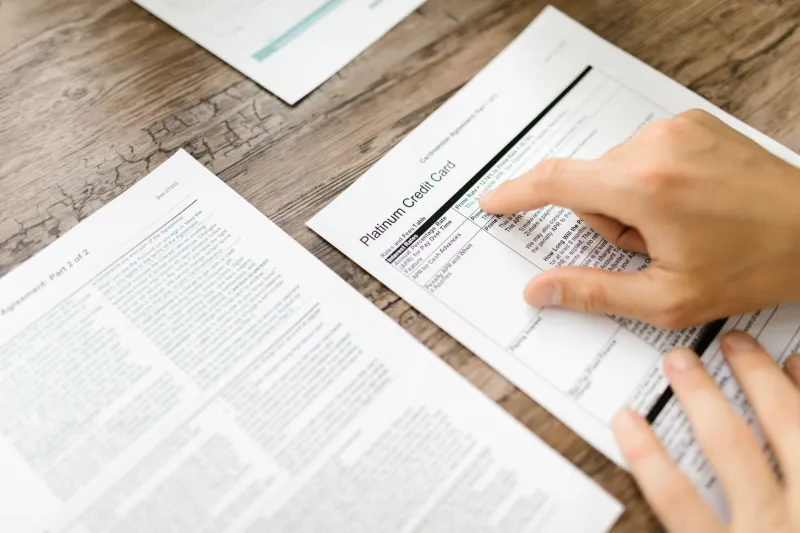
The actual contract — the one you'd have to request separately, read carefully, and probably have a law degree to fully parse — is where the magic trick happens. The broad, comforting language of the sales pitch gets quietly replaced by a labyrinth of categorical exclusions, conditional qualifiers, and defined terms that mean something entirely different from what a normal human being would assume.
Let's talk about some of the greatest hits.
Water Damage: The Most Common Claim Best Buy Loves to Deny
Spill a glass of water on your laptop? Drop your phone in the sink? These are among the most statistically common ways consumer electronics get destroyed in American households. You'd think a protection plan worth its price tag would cover them without question.
Think again.
Best Buy's standard Geek Squad Protection plan does not automatically cover accidental liquid damage unless you've specifically purchased their "Accidental Damage from Handling" (ADH) tier — which, of course, costs more. And here's the kicker: even within ADH coverage, there are conditions. The damage has to be deemed "accidental" by their technicians, which introduces a delightful layer of subjectivity into the process. If a Geek Squad tech decides the damage pattern looks like the device was submerged rather than splashed, or that there's evidence of "repeated" exposure to moisture, your claim can be reclassified and denied.
So your $400 protection plan on a $1,200 laptop might not cover the thing that's most likely to actually destroy your $1,200 laptop. Neat!
Power Surges: An Act of God (Convenient for Best Buy)
Here's a scenario that plays out in living rooms across America every single summer: a storm rolls in, lightning strikes nearby, and a power surge fries your television, your gaming console, or your home theater receiver. You paid for protection. Surely this is covered.
Well. It depends.
Best Buy's protection plans have historically drawn a sharp distinction between a power surge and what they classify as an "external event" or "act of God." If the surge is traced back to a lightning strike — which, again, is one of the most common causes of surge damage in the United States — it can be categorized as an environmental or weather-related event rather than a mechanical failure. Environmental damage, in many plan tiers, falls squarely into the exclusion column.
This is the kind of clause that sounds almost reasonable in isolation, right up until you realize it systematically excludes one of the most predictable and common real-world failure scenarios. It's not a bug in the coverage design. It's a feature.
Accidental Drops: The Definition Game
Let's say you drop your tablet. Cracked screen, busted corner, won't power on. You've got ADH coverage. Open and shut case, right?
Not quite. The word "accidental" carries more legal freight than it appears to. Best Buy's plans typically define accidental damage as damage resulting from an unintentional single incident. Here's where it gets slippery: if a technician determines that your device shows evidence of multiple impacts, previous unrepaired damage, or what the plan language often calls "cumulative damage," the claim can be denied on the grounds that the failure wasn't the result of a single qualifying accident.
In practice, this means that if your phone case has a scuff from six months ago and you drop your phone today, a motivated claims adjuster has the contractual ammunition to argue your device's current state isn't the result of one accidental event. They probably won't always use it. But they can. And the fact that they can is the point.
The Definitions Section: Where Claims Go to Die
Every Best Buy protection plan contract includes a definitions section. Most people skip it. Best Buy is counting on that.
This is where terms like "mechanical failure," "normal wear and tear," "accidental damage," and "cosmetic damage" get quietly redefined in ways that benefit the company. A cracked screen might be cosmetic damage (not covered) rather than functional damage (covered), depending on whether the crack affects the display's operation in a way the technician can replicate in-store. A battery that degrades to 75% capacity might be classified as "normal wear and tear" rather than a defect, even if it's making your device unusable.
The definitions aren't designed to clarify. They're designed to create escape routes.
What You Should Actually Do
None of this means you should never buy an extended warranty on anything, ever. Some products — particularly appliances and electronics with historically high failure rates — genuinely benefit from extended coverage. But you should go in with your eyes open.
Before you hand over money for a Best Buy protection plan, do three things. First, ask the associate to show you the full contract before purchase — not the marketing brochure, the actual terms document. Second, look specifically for the exclusions section and read every line. Third, Google the specific product you're buying plus "Geek Squad claim denied" and see what other consumers have experienced.
You might find that the $200 protection plan on your laptop would only actually cover a fairly narrow set of circumstances that you're statistically unlikely to encounter. Or you might decide the coverage is worth it for your specific situation. Either way, you'll be making an informed decision rather than buying a feeling.
The Bottom Line
Best Buy's protection plans are a profitable product line for a reason. That reason is not because they pay out generously on the majority of claims. The plans are engineered with enough categorical flexibility that a significant percentage of real-world failures can be legitimately — if cynically — excluded from coverage.
The warranty shell game works because most consumers never read the contract, never learn the magic words needed to make a claim stick, and never realize until it's too late that "comprehensive coverage" was always a marketing phrase, not a legal commitment.
So the next time a blue shirt asks if you want to protect your investment, maybe ask them to define "protect" first. In writing. With a notary.