Voided Before You Even Knew It: The Repair Trap Buried in Your Geek Squad Contract
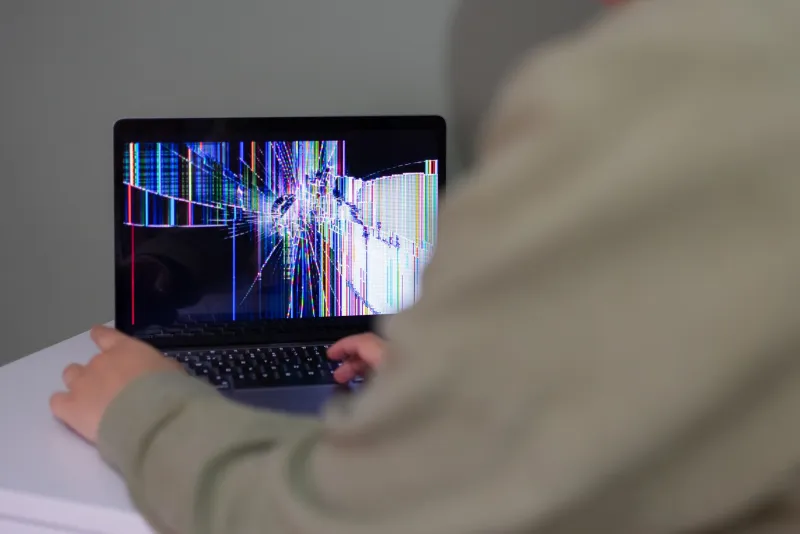
You bought the plan. You paid the monthly fee. You did everything right — or so you thought. Then your laptop died, you took it to a local repair shop because Geek Squad had a two-week wait, and suddenly your protection plan is worth exactly as much as the paper it was theoretically printed on. Which is to say: nothing.
Welcome to Best Buy's warranty void gotcha — a masterpiece of contractual engineering that turns your coverage into a ticking time bomb, primed to explode the moment you try to exercise any consumer autonomy whatsoever.
The Authorized-Only Clause Nobody Reads (Until It's Too Late)
Buried inside Best Buy's Geek Squad Protection agreements is language that requires all covered repairs to be performed by "authorized service providers" — a list that, shockingly, begins and ends with Best Buy itself. The clause sounds reasonable in isolation. After all, you wouldn't want some random guy in a parking lot cracking open your $1,800 laptop, right?
But here's where the trap snaps shut: the clause doesn't just apply to major repairs. In many documented cases, consumers have had claims denied because they visited an independent shop for something as minor as a cracked screen replacement or a keyboard cleaning. One Reddit user in the r/BestBuy community described paying $120 out-of-pocket at a local Apple-certified repair shop — not a random parking lot guy, mind you, an Apple-certified technician — only to be told by Best Buy that their plan was now void because the repair wasn't performed through Geek Squad.
"They said I should have brought it to them first," the user wrote. "I told them their earliest appointment was 11 days away. They told me that was my problem."
It is, apparently, your problem.
The Diagnostic Fee Racket
Let's say you're a savvy consumer. You read the fine print. You know you have to use Geek Squad. So you book an appointment, drag your device to the store, and wait in line behind three people arguing about HDMI cables. The Geek Squad agent plugs in your device, nods seriously, and informs you that before they can do anything, they need to run a diagnostic.
That diagnostic, by the way, costs money. Typically between $49.99 and $149.99 depending on the device and the day of the week and, seemingly, the phase of the moon.
Now, if your claim is approved, Best Buy will sometimes — sometimes — apply that diagnostic fee toward the repair cost. But if your claim is denied? You've paid for the privilege of being told no. And if you decide the repair cost isn't worth it and walk away? You're still out the diagnostic fee, your device is still broken, and your protection plan is still technically "active" for whatever that's worth.
Several consumer complaint threads on the Better Business Bureau's website describe this exact loop. One complainant from Ohio wrote that she paid a $99 diagnostic fee on a washing machine covered under a Geek Squad home appliance plan, only to be told the damage was caused by "improper installation" — a determination made without any visit to her home. The claim was denied. The $99 was not refunded. The washing machine is, presumably, still broken.
The Documentation Labyrinth
For those persistent enough to push a claim forward, Best Buy has constructed an impressive bureaucratic maze designed to exhaust even the most motivated consumer.
To successfully file a claim, you may be asked to provide:
- Original purchase receipt (good luck if you bought it three years ago)
- Proof of protection plan enrollment (separate from your receipt, naturally)
- A detailed description of the issue submitted in writing
- Photos or video of the damage or malfunction
- Confirmation that no unauthorized repairs were performed (see above)
- Manufacturer documentation in some cases, particularly for appliances
Miss one item? Claim delayed. Submit everything but in the wrong format? Claim delayed. Call to follow up and get a different agent each time who has no record of your previous calls? Welcome to the club — they have jackets.
Consumer attorney groups have begun flagging this documentation complexity as a deliberate friction strategy — sometimes called "claim fatigue" in industry parlance — designed to reduce the number of claims that actually reach resolution. The logic is grimly simple: the harder you make it to file, the more people give up.
What the Contract Actually Says (vs. What They Tell You in Store)
Here's the part that should genuinely make your blood pressure tick upward: the salespeople who pitch you these protection plans often don't describe them the way the contracts actually read.
In-store, you're told you're covered for "accidents, malfunctions, and manufacturer defects." The contract, meanwhile, carves out exceptions for damage caused by "failure to follow manufacturer instructions," "environmental conditions," "cosmetic damage that doesn't affect functionality," and — our personal favorite — "damage resulting from service performed by anyone other than an authorized provider."
That last one is doing a lot of heavy lifting.
A consumer advocacy group called Consumer Reports has previously highlighted how extended warranty contracts sold at major retailers frequently contain language that shifts the burden of proof onto the consumer in ways that weren't disclosed at point of sale. Best Buy's contracts are, shall we say, consistent with that tradition.
So What Can You Actually Do?
If you're already locked into a Geek Squad plan, a few practical notes:
- Never get a repair done anywhere else without calling Best Buy first. Even if their wait time is absurd, get it on record that you attempted to use their service. Ask them to document the wait time.
- Keep every receipt. Every single one. Forever. Digitize them.
- Record your calls. Check your state's one-party or two-party consent laws first, but documentation is your best friend.
- File a complaint with the FTC and your state attorney general if a claim is wrongfully denied. These complaints actually do get aggregated and reviewed.
- Dispute the charge with your credit card company if you paid for a diagnostic and the claim was denied without legitimate cause.
And if you're considering buying a Geek Squad plan? Read the full contract before you sign. All of it. Yes, even the boring parts. Especially the boring parts. That's exactly where they hide the good stuff — good for them, catastrophic for you.
Best Buy has built a protection plan ecosystem that generates revenue on two fronts: the monthly fees you pay whether you file a claim or not, and the repair revenue they capture from consumers who have no other authorized option. It's an elegant business model, if you're the one running it. For everyone else, it's a warranty that works best when you never actually need it — which is, coincidentally, exactly how they designed it.