Click, Confirm, Vanish: The Geek Squad Booking Black Hole Swallowing Your Time and Money
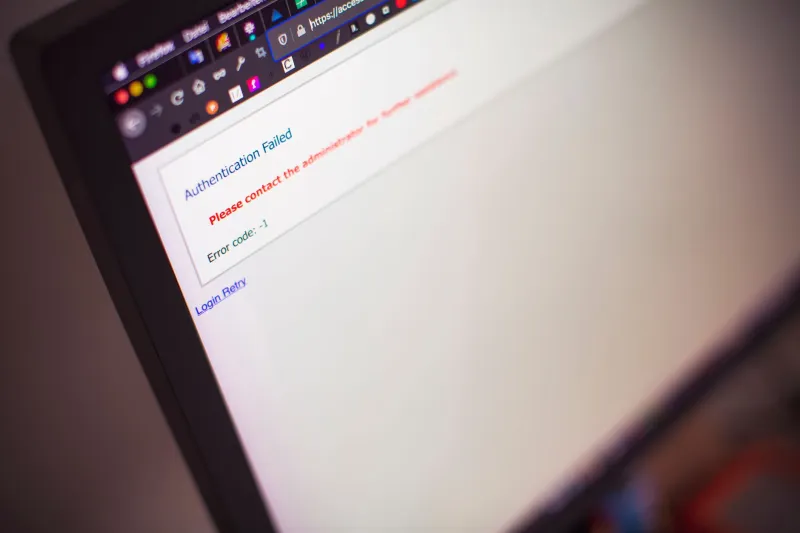
Imagine this: your laptop dies on a Tuesday. Not a convenient, planned death — a sudden, catastrophic, "I have a presentation tomorrow" kind of death. You scramble to Best Buy's website, navigate to the Geek Squad scheduling portal, and exhale with relief when you see a glorious green checkmark next to "Tomorrow, 10:00 AM — Available." You click it. You fill in your information. You hit confirm.
And then — poof. "Sorry, that appointment is no longer available."
You try the 11:00 AM slot. Same result. Noon. Gone. 2:00 PM. Vanished. Suddenly, every single slot for the next five days has evaporated, and the earliest available appointment is three weeks from Thursday. Unless, of course, you'd like to upgrade to an in-home visit — starting at a cool $49.99 to $99.99 extra, depending on the service.
Coincidence? Negligence? Or is something more calculated going on inside Best Buy's scheduling machinery?
The Ghost Slots of Geek Squad Nation
We've been collecting reader complaints about this phenomenon for months, and the pattern is impossible to ignore. Across dozens of submissions from customers in markets ranging from suburban Chicago to downtown Atlanta to a strip-mall Best Buy in Albuquerque, the story is almost always identical: the portal shows availability, the customer attempts to book, and the system rejects the selection — often multiple times in a row — before presenting a dramatically less convenient option.
Reader DenverDadOf3 submitted this gem: "I saw nine open slots on a Saturday morning. Tried every single one. Every single one said it was taken. Called the store — they told me their system 'sometimes has a lag.' A lag that somehow only runs in one direction. Funny how that works."
From TexasTechTerri: "I spent forty-five minutes clicking through appointment times like I was trying to win a radio contest. Finally gave up and paid for the in-home service. The tech who showed up said, and I quote, 'Yeah, the online system is kind of a mess.' Kind of a mess that made me spend an extra sixty bucks, but sure, no big deal.'"
And then there's MichiganMarcus, who took screenshots — actual timestamped screenshots — showing an "Available" badge on a 3:00 PM slot, followed immediately by an error message claiming the slot was taken. He tried again thirty seconds later. Available. Error. Available. Error. "It felt like a slot machine that was rigged to never pay out," he wrote. "Except instead of quarters, I was losing my sanity."
Is This a Bug or a Business Model?
Let's be charitable for a moment and entertain the possibility that Best Buy's scheduling system is simply bad software. It's not impossible. Large retailers are not always paragons of IT excellence, and appointment-booking platforms can struggle with real-time inventory syncing across hundreds of locations.
But here's where the charitable interpretation starts to wobble: the "failure" has a suspiciously consistent outcome. Customers don't land on a random inconvenient option. They don't get bumped to a slightly different time at the same store. The system almost universally funnels frustrated users toward premium upsells — specifically, in-home service appointments that carry meaningfully higher price tags.
If your software bug reliably generates revenue, it stops being a bug. It becomes a feature.
Consider the math. Best Buy's Geek Squad in-home services run anywhere from $49.99 for a basic "consultation" to well over $150 for device setup or repair visits. If even a fraction of the customers who encounter phantom scheduling errors give up and pay for the premium option, that's a significant revenue stream built entirely on the friction created by a supposedly broken booking tool.
We reached out to Best Buy's media relations team with specific questions about the scheduling system's architecture, real-time slot availability accuracy, and whether the company tracks conversion rates from failed bookings to premium service purchases. We received a form response about their "commitment to customer satisfaction." Which, respectfully, is not an answer.
The Store-Side Story
We also did something radical: we called actual Best Buy stores and asked employees directly about the scheduling system. What we heard was illuminating, if not exactly shocking.
One employee at a mid-sized Midwest location — who asked not to be identified because, you know, they'd like to keep their job — told us that the in-store appointment calendar and the online booking portal "don't always talk to each other the way they should." Another described the online system as "always a little behind" on availability updates.
But here's the thing: "a little behind" doesn't explain a customer who sees nine available slots and gets rejected nine consecutive times within a single session. That's not a sync delay. That's a wall.
A former Geek Squad agent who reached out via our tip line put it more bluntly: "The in-store calendar fills up fast, especially on weekends. But the website keeps showing slots as open because it's pulling from a different data source. Nobody at the store level fixes it because it's not their problem to fix. And corporate doesn't fix it because... well, frustrated customers who can't get a free appointment tend to pay for the expensive ones."
Draw your own conclusions.
What You Can Actually Do About It
If you're currently trapped in the Geek Squad scheduling vortex, here's the survival guide we wish someone had handed us:
Call the store directly. Bypass the website entirely. Ask to speak with the Geek Squad desk and book over the phone. Slots that appear unavailable online sometimes magically exist when you're talking to a human being.
Try off-peak times. Early weekday mornings — think Tuesday or Wednesday before noon — tend to have genuine availability. The system's phantom slots are most rampant on weekends when demand is highest and the gap between real and displayed availability is widest.
Document everything. If you're experiencing the phantom slot phenomenon, take screenshots with timestamps. This is useful if you end up disputing charges or filing a complaint with your state's consumer protection office.
Consider the competition. uBreakiFix (now Asurion Tech Repair) operates independently of Best Buy's ecosystem and often has walk-in availability. Apple Stores, for Apple products, typically offer more reliable Genius Bar scheduling. Your local independent repair shop — which Best Buy has spent years trying to make you forget exists — is frequently faster, cheaper, and infinitely less maddening to deal with.
File a complaint. The FTC's consumer complaint portal and your state attorney general's consumer protection division are both worth a visit if you believe you've been deliberately manipulated into a more expensive service option.
The Bottom Line
We can't prove, in a court-of-law sense, that Best Buy's phantom scheduling system is an intentional design choice rather than chronic technical incompetence. What we can say is this: the company has had years to fix a booking tool that consistently fails customers in a direction that benefits its own bottom line, and it hasn't.
At some point, the distinction between "we can't fix it" and "we won't fix it" stops mattering to the customer who just paid $79 for an in-home visit they never wanted because every other option mysteriously disappeared.
Welcome to the Geek Squad experience. The appointment is always available — right up until the moment you try to take it.