Red Tag, Red Flag: The Dirty Secret Behind Best Buy's Clearance 'Deals'
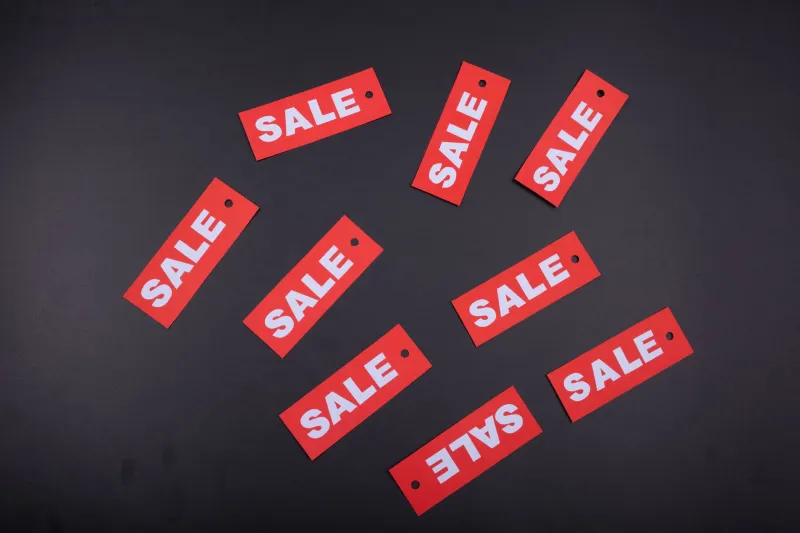
There's a particular kind of retail theater that Best Buy has perfected, and it lives in the back corner of every store under a hand-painted banner screaming "CLEARANCE." The fluorescent lights flicker a little harder back there. The shelves look slightly more chaotic. And somewhere between the dented box and the dramatic red price tag, something important goes missing — your right to return the thing if it's garbage.
Welcome to the clearance section, where Best Buy's worst inventory goes to find its final victim.
The Anatomy of a 'Final Sale'
Let's start with what Best Buy doesn't put on the red tag. You'll see the original price, crossed out with the kind of theatrical flourish usually reserved for Broadway productions. You'll see the new, lower number in a font size that could be read from space. What you won't see — at least not without a magnifying glass and a law degree — is the quiet notation that this item is "final sale" and carries exactly zero return eligibility.
Best Buy's standard return window is already a 15-day sprint that would make most consumers sweat. But clearance items? Those come with a return policy roughly equivalent to "good luck, pal." Once that transaction clears, the product is yours forever, in whatever condition it happens to be in, working or otherwise.
This isn't an accident. It's architecture.
Why Is This Stuff on Clearance in the First Place?
Here's the question Best Buy really doesn't want you sitting with while you're standing in that back aisle: Why is this particular item on clearance?
Retailers clearance merchandise for a handful of reasons, and almost none of them are "we just have too much of this amazing product that everyone loves." The real reasons tend to fall into more uncomfortable categories:
- The model is being discontinued because a better version exists (often sold three feet away at full price)
- The item has been returned multiple times and is being recycled back onto the floor with fresh packaging
- It's a slow mover that sat on shelves long enough to collect dust and consumer indifference
- There are known issues with the product line that make it hard to sell at full margin
Best Buy knows exactly why each item ended up in clearance purgatory. You, standing there with your cart and your optimism, do not. And the store has structured the entire experience to keep it that way.
The Psychology of the Red Tag
Pricing researchers have documented this for decades: humans are wired to anchor on the original price. When you see a $400 soundbar marked down to $179, your brain does a little victory dance before your rational mind has a chance to ask whether $179 for a discontinued soundbar with a non-existent return policy is actually a good deal.
Best Buy's merchandising team understands this completely. The original price on those clearance tags isn't just information — it's bait. It reframes the purchase as a win before you've even touched the box. You're not buying a product of unknown reliability with no recourse if it fails. You're saving $221.
This is the same psychological sleight of hand that makes outlet malls feel like a steal even when the "original prices" on the tags were never real to begin with. The discount is the product. The actual product is secondary.
Price Match? Not Here, Friend
Best Buy's price match policy — already a labyrinth of exclusions and fine print — doesn't apply to clearance items. So if you buy that red-tagged television and find the same model (if you can even find the same model, given Best Buy's habit of using exclusive SKUs) cheaper somewhere else the next day, you're out of luck.
This matters more than it sounds. Clearance pricing is inherently volatile. Items get marked down further as they age. The $179 soundbar you bought on Tuesday might be $129 by Friday, and Best Buy's response to your price adjustment request will be a polite but firm no, delivered by someone in a blue shirt who seems genuinely apologetic while being completely unhelpful.
The 'Open Box' Overlap Problem
If you've spent any time in Best Buy's clearance section, you've noticed that it often blurs together with the open-box merchandise. Both categories share the same general neighborhood of the store, the same red-tag aesthetic, and — crucially — the same stripped-down consumer protections.
This overlap is convenient for Best Buy and confusing for everyone else. A brand-new clearance item and a previously returned open-box item can look nearly identical on the shelf, but they represent very different risk profiles for the buyer. One has never been used. The other has been inside someone's home, possibly failed, been returned, and been re-tagged for resale.
Are both clearly labeled? Technically, yes. Are they labeled in a way that the average shopper actively registers while they're mentally celebrating their $221 in savings? That's a harder question.
What You Can Actually Do About It
The clearance trap is real, but it's not inescapable if you go in with your eyes open.
Do your homework before you touch the tag. Pull out your phone and spend three minutes researching the specific model number. Check review aggregators. Look at the manufacturer's website to see if it's been discontinued. Search Reddit. Other people have almost certainly bought this exact item and have opinions about it.
Ask the blue shirt directly why the item is on clearance. You won't always get a straight answer, but the response itself is often informative. Vague non-answers about "inventory rotation" are a yellow flag. A specific, confident explanation is more reassuring.
Factor the no-return policy into your price calculation. That $221 in savings disappears fast if the product fails three weeks in and your only option is a Geek Squad diagnostic fee. A final sale price needs to be a significantly better deal than a returnable item to justify the added risk.
Consider whether the manufacturer warranty still applies. Clearance status doesn't automatically void a manufacturer's warranty, though the timeline may be partially consumed depending on how long the item sat in inventory. Check the manufacture date if you can find it.
The Bottom Line
Best Buy's clearance section isn't a gift. It's a liquidation strategy dressed up in discount clothing. The store is trying to convert inventory it couldn't otherwise move into revenue it couldn't otherwise capture — and it's doing so by removing the safety nets that might otherwise give a cautious shopper pause.
The red tag is a marketing tool. The "final sale" designation is a liability shield. And the psychological magic of a crossed-out price is doing a lot of heavy lifting to make you feel like you won when, in many cases, Best Buy is the one walking away with the better end of the deal.
Shop the clearance section if you want. Just know what game you're actually playing before you hand over your card.